
A radial air purifier pulls in dirty air from every side at once. Then it pushes clean air back out in a full circle. That one change is why these units work so well in warehouses, gyms, and open offices. A normal box-shaped purifier can't keep up.
Most people picture an air purifier as a plain box. It has a filter on one side and a fan on top. That works fine in a small bedroom. It struggles in a big warehouse. The problem isn't the filter. It's the shape.
A front-facing purifier can only "see" the air right in front of it. That leaves corners, aisles, and far walls untouched. Radial airflow fixes this by changing the shape of the whole machine.
What Makes Airflow "Radial" in the First Place
Think of a radial air purifier like a lighthouse, not a flashlight. A flashlight sends light one way. A lighthouse sends light all the way around. That's the real difference here.
Inside a radial unit, the fan and filter sit in the middle. They're shaped like a cylinder, not a flat panel. Air gets pulled in from all sides. It passes through the filter. Then it goes back out in every direction.
There's no "back" of the machine that never touches moving air. Every side pulls in air. That means the purifier works the whole room around it, not just one small slice of it.
This matters more than you'd think. In big rooms, air doesn't move in a straight line. It drifts. It pools near the ceiling. It gets stuck in corners. A radial air purifier is built to break up that stuck air. It pulls from all sides at the same time.
Why Large Spaces Need This Differently
Warehouses, gyms, factories, and shipping centers all share one problem. They have a lot of air and not enough movement. A small room clears out fast. The space is tight, and the purifier reaches most of it. A big open hall can take hours with the same machine. There's just more air, and it has farther to go.
Radial airflow helps close that gap in two ways.
First, pulling air from every side means the machine catches more dirty air right away. It doesn't wait for air to drift toward one small opening. Second, pushing clean air out in a circle sends it much farther into the room. A normal purifier only pushes air in one narrow line.
The result is faster, more even cleaning. Dust and small particles get caught closer to where they start. They don't get the chance to settle on shelves, machines, or floors first.
Where a Radial Air Purifier Actually Earns Its Keep
Not every room needs this kind of airflow. A radial air purifier makes the biggest difference in spaces like these:
Open floor plans with no inside walls: warehouses, hangars, and shipping centers
Dusty work areas: woodworking shops, metal shops, and concrete cutting floors
Rooms with tall ceilings: warm air rises and sits near the roof, while cool air (and dust) sinks lower
Places that run all day and night: where you can't shut things down to "catch up" on clean air
In spots like these, a front-facing purifier cleans only part of the room. The rest keeps breathing in dirty air. Radial airflow closes that gap. It doesn't wait for air to find its way to one side of the machine.
There's another benefit too. Tall buildings often have warm air stuck near the roof and cold air near the floor. The strong, all-direction airflow from a radial unit helps mix those layers back together. Some facilities say this even helps lower heating costs in winter, since warm air no longer sits untouched up top.
What to Actually Check Before Buying One
If you're comparing units, airflow power (measured in CFM or m³/h) matters. But it doesn't tell you everything. A few other things matter just as much.
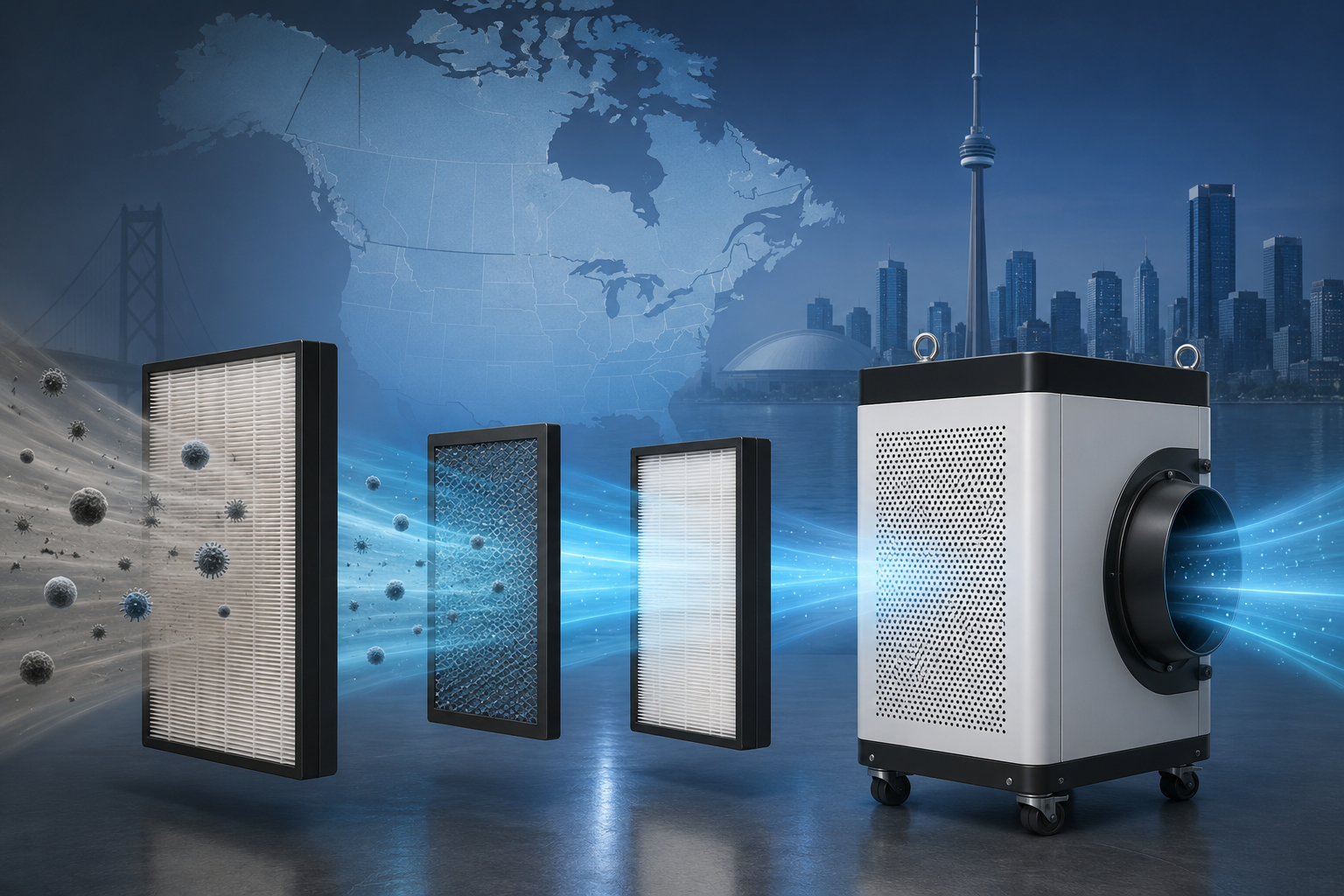
Filter stages. Look for a pre-filter. It catches big particles before they hit the fine filter layer. This makes the main filter last much longer, which matters a lot in dusty rooms.
Noise level. A strong fan pulling air from every side can get loud. If people work close to the unit, check the noise rating, not just the airflow numbers.
Mounting choices. Some radial units sit on the floor. Some hang from the ceiling. A few can do both. Ceiling mounting saves floor space in tight warehouse aisles. That's a real plus once you've actually walked through a busy facility.
Ratings and standards. Look for filter ratings like ISO 16890 or EN 1822. These let you compare filters across brands, instead of trusting ad copy alone.
This is also where the maker of the machine matters more than the spec sheet. An industrial radial air purifier manufacturer that builds for warehouses and factories- not one that resizes a home model- tends to get the filter stages, noise control, and mounting choices right from the start. They've already run into the problems that only show up after months of hard, daily use.
Setting Expectations Correctly
A radial air purifier is not a fix for everything. If a facility keeps making heavy dust from an open process, airflow design alone won't solve that. It just helps manage the dust that's already in the air. Pair the purifier with good ventilation and dust control at the source. That's when the airflow benefit really shows.
It's also not a one-size-fits-all tool. A small office doesn't need the reach that a warehouse needs. Buying a machine that's too big adds noise and cost without much extra benefit. The value of radial airflow grows with the size of the room and how spread out the dust is.
Bottom Line
Shape changes performance more than most people expect. A radial air purifier moves air from every side, not just one. That's exactly what large, open spaces need. It avoids the stuck corners and slow air turnover that front-facing units struggle with.
If you're setting up a warehouse, factory floor, or any big facility, work with a trusted industrial radial air purifier manufacturer. Pick one that understands round-the-clock work, not just numbers on a page. That choice will save you time, money, and a lot of trial and error down the road.









Write a comment ...